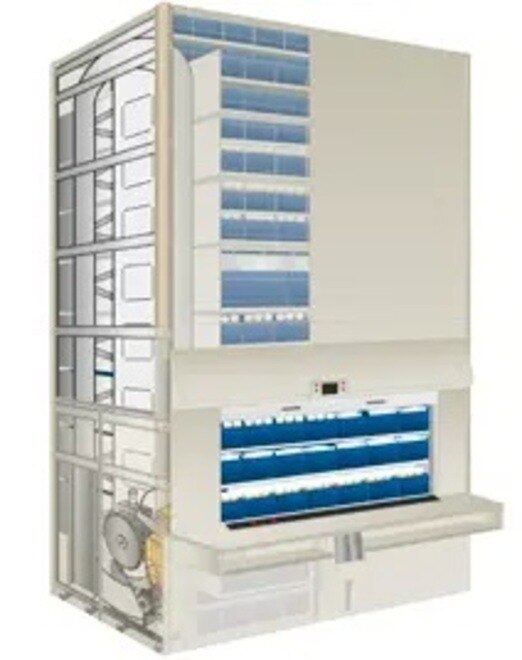
The right machine depends on more than the available ceiling: SKU variety, load dimensions, transaction peaks, floor strength, fire protection, software interfaces, and service access all affect the decision. By the end, you can shortlist the appropriate configuration, reject unsuitable options, measure the site, and compare supplier proposals on usable capacity, performance, risk, and total cost.
Key takeaways
- Match the system to SKU variety, dimensions, weight, turnover, and peak transactions.
- Measure clear height, slab capacity, aisles, access routes, and utilities before sizing storage.
- Compare automation against racks, compactors, mezzanines, and floor storage for your operating pattern.
- Require integration, guarding, recovery procedures, power details, and comparable quotation line items.
Start with the inventory and transaction pattern, not the machine name
Match the storage configuration to SKU variety, item dimensions, weight, turnover, and peak transactions—not to the machine name. A vertical lift module suits many SKUs with uneven sizes and moderate demand: adjustable trays rise inside a tower and present the selected tray at an access opening.
It loses its advantage when tray heights are poorly configured or operators cannot confirm item locations quickly.
| Configuration | Best fit | Main trade-off |
|---|---|---|
| Vertical lift module | Mixed components, cartons, and small finished goods | Tray sizing and presentation speed govern real capacity |
| Vertical carousel | Repetitive picking from similarly sized items | Less flexible for heavy or irregular loads |
| Automated storage and retrieval system | Pallets, totes, or high-volume, standardised loads | Requires disciplined interfaces, aisles, and load-unit control |
| Racks or compactors | Stable demand and lower automation requirements | More floor travel, manual searching, and access constraints |
For an automatic vertical storage system for facilities in Pune, size around peak simultaneous picks and puts, not cubic metres alone. Use this calculation: required machines or access stations = peak transactions per hour ÷ validated transactions per machine per hour. Include travel, operator handling, replenishment, fault recovery, and overlapping shifts.
Confirm these inputs before comparing quotations:
- SKU count and dimensions
- Maximum payload per tray, bin, or tote
- Average and peak picks, puts, and replenishments per hour
- Batch or serial tracking requirements
- Required presentation time and number of operators
- Actual container types used during acceptance testing
A demonstration with empty trays proves little. Test the buyer’s loads, item master, barcode or RFID confirmations, inventory accuracy, and recovery after a power loss.
Measure the Pune site before you calculate storage capacity
A tape measure is not enough: automatic vertical storage in Pune must fit the building, carry its operating loads, and remain serviceable during a fault.
1. Record clear internal height, floor-to-obstruction height, column positions, aisle width, doors, loading routes, fire exits, and maintenance access. Measure floor flatness, not just area; an uneven slab can misalign a tall machine.
2. Give the structural engineer the machine’s total operating mass, concentrated support reactions, dynamic loads, seismic restraint details, slab thickness, reinforcement drawings, and permissible floor loading. Warehouse floor capacity stated in tonnes per square metre does not prove that a few support points can carry the system safely.
3. Mark sprinkler heads, pipework, smoke detectors, emergency lighting, and required clearance above the machine. Confirm that trays, bins, and service openings do not obstruct escape routes or reduce fire-protection coverage. Obtain the building owner’s and fire authority’s approval before relocation work.
4. Verify incoming voltage, phase capacity, connected load, earthing, short-circuit protection, cable routes, generator compatibility, and UPS requirements. Include isolation points at the machine and access opening; a power failure without controlled recovery can trap inventory.
5. Check Pune’s heat, humidity, dust, monsoon water ingress, and ventilation against the supplier’s operating limits. Then size using peak picks and puts per hour, operator handling, replenishment, fault recovery, and shift overlap—not cubic metres alone. Record payload, usable tray height, overhang limits, and actual load-unit dimensions before comparing quotations.
Compare automatic storage with racks, compactors, mezzanines, and floor storage
Automatic vertical storage delivers better value when floor space is scarce, SKU access is frequent, and controlled presentation reduces walking, search time, or picking errors. It is harder to justify for slow-moving, bulky items that fit cheaply on open floor or conventional racks.
| Option | Strength | Limitation |
|---|---|---|
| Selective racks | Low entry cost and flexible pallet access | Consume aisle space and rely on operator travel |
| Mobile compactors | Higher density than fixed racks | Only one access aisle is available, slowing simultaneous picks |
| Mezzanines | Add storage or work area above the floor | Require structural review, stairs, fire protection, and manual handling |
| Floor storage | Lowest equipment complexity for stable, bulky loads | Poor cubic-metre utilisation and weak location control |
| Vertical lift module or carousel | Dense storage for trays, bins, tools, and small parts | Height, payload, item dimensions, and transaction rate limit the fit |
| Pallet AS/RS | High-capacity, integrated pallet movement | Crane, conveyor, and controls add cost and complexity |
Calculate usable capacity, not the supplier’s tray count or gross cubic metres. For each tray or bin, deduct unusable height, clearance, overhang restrictions, and incompatible item dimensions; then add only locations that match your actual inventory. Exclude aisles, service zones, electrical panels, and maintenance access from the storage figure.
Size access capacity separately: required machines or stations equals peak simultaneous picks and puts divided by validated transactions per hour. Reduce that validated rate for travel, operator handling, replenishment, fault recovery, and shift overlap.
Compare total cost of ownership, including slab reinforcement, anchorage, electrical and fire changes, software integration, training, maintenance, spares, UPS or battery replacement, and breakdown access. A vertical storage system in Pune earns its premium when recovered floor area and reliable throughput outweigh those costs.
Specify integration, safety, power, and recovery before you approve the design
Approve the design only after the supplier proves how the machine will operate, stop, restart, and communicate with your facility.
1. Specify interfaces: name the WMS or ERP connection, API or protocol, barcode or RFID devices, PLC handshakes, user permissions, inventory audit trail, and manual recovery process. Confirm who owns each interface and what happens when the network fails.
2. Specify safeguards: require guarding, access-door interlocks, emergency stops, light curtains or presence sensors at the access opening, overload detection, safe maintenance isolation, and alarms that identify the failed component. Ask for the risk assessment and safety circuit category, not a promise of “safe operation.”
3. Check the structure and power: verify total operating mass, concentrated support reactions, dynamic loads, slab thickness, reinforcement, permissible floor flatness, anchorage, and seismic restraint. Pune is in Seismic Zone III, so a tall machine in a multi-storey building needs an engineered restraint design.
Confirm supply voltage, connected load, earthing, UPS coverage, controlled shutdown, and restart behaviour.
4. Put recovery into the acceptance test: measure peak and sustained transactions per hour, presentation time, put-away and inventory accuracy, fault-clearance time, and recovery after power loss using actual containers and payloads. Empty trays prove little.
5. Price service as part of the automated storage system in Pune: include preventive maintenance, response times, spare drives and sensors, battery or UPS replacement, remote diagnostics, operator training, and the cost of lost access during a breakdown.
Use a staged Pune installation plan and a comparable quotation
Plan the retrofit around access, not equipment delivery. For vertical warehouse storage in Pune, survey the slab, utilities, fire routes, doors, and maintenance zone before freezing the layout. Move fast-moving stock to a temporary location, install one machine or zone at a time, and schedule shutdowns outside dispatch peaks.
Protect open equipment from monsoon moisture, dust, and water ingress.
Request comparable quotations with the same duty cycle, load unit, and usable capacity. Require each supplier to state:
- Machine dimensions, total operating mass, support reactions, anchorage, seismic restraint, tray payload, usable tray height, and overhang limit
- Peak transactions per hour, recovery time after a fault, barcode or RFID checks, and WMS or ERP interface scope
- Civil, electrical, sprinkler, drainage, enclosure, humidity-control, software, commissioning, and training costs
- Preventive-maintenance visits, response time, uptime commitment, spare drives and sensors, UPS or battery replacement, and breakdown escalation
- Warranty exclusions, annual support charges, and the cost of temporary access during a prolonged outage
Ask Dofort to separate these costs rather than burying them in a single turnkey figure; that makes supplier evaluation defensible.
Commission with production-like trays, actual item masters, batch or serial rules, and exception transactions. Test wrong-item prevention, power recovery, manual retrieval, fire isolation, and backup procedures before acceptance. Train operators, maintenance staff, and supervisors on daily checks and fault recovery, then review transaction accuracy, downtime, and service response monthly for the first quarter.
Related products
 | Storage System Capacity: Customized View product → |
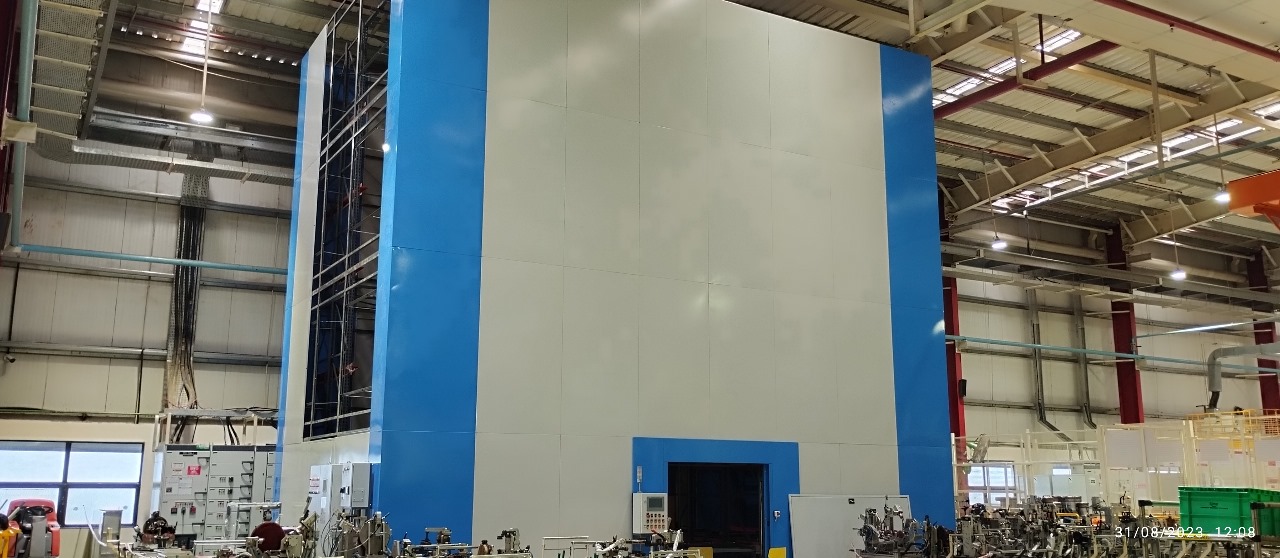 | Automation SPM Automated Material Handling System ASRS – Automated Storage and Retrieval System System Description: A PLC-controlled automated storage system designed for high-density vertical... View product → |
Frequently asked questions
How do you choose an automatic vertical storage system for a Pune facility?
Start with SKU variety, item dimensions, weight, turnover, and peak transactions. A vertical lift module suits many SKUs with uneven sizes and moderate demand.
What should you measure before calculating vertical storage capacity?
Measure clear height, floor area, slab capacity, aisle width, access routes, door and beam clearances, electrical supply, and fire-protection constraints.
How does automatic vertical storage compare with racks, compactors, mezzanines, and floor storage?
Compare each option by storage density, retrieval speed, SKU access, labour needs, expansion limits, floor loading, and the building work required.
What should a Pune automated storage specification include?
Specify inventory software integration, safety guarding, access control, emergency stops, power requirements, manual recovery, maintenance access, installation stages, and itemised quotation assumptions.