A quoted cycle time does not tell you whether automation will improve production: feeding problems, changeovers, tooling failures, downtime, and safety controls can erase the apparent gain. You will be able to calculate the real payback, compare suitable mechanisms, specify the application, and demand production evidence before approving a purchase.
Key takeaways
- Separate the transfer machine from the complete production cell.
- Calculate payback from labour, cycle time, scrap, and downtime.
- Match the gripper, mechanism, stroke, payload, and cycle to the part.
- Demand a documented factory acceptance test with your real parts.
What an SPM pick-up-and-drop system actually includes
An SPM pick-up-and-drop system is a material-transfer machine, not automatically a complete production cell. “SPM” means special-purpose machine, so the mechanism may be a Cartesian gantry, SCARA or articulated robot, pneumatic slide, servo axis, or combination.
The equipment package usually includes:
- A motion mechanism sized for the part payload, gripper mass, reach, lift height, acceleration, and required repeatability.
- A dedicated gripper or vacuum tool, with jaw sensors, vacuum switches, part-presence detection, and tooling for the actual part geometry.
- Infeed and outfeed conveyors, nests, fixtures, stops, or chutes that present parts at known positions.
- A PLC, servo drives, HMI, recipe controls, sensors, fault handling, and operator pushbuttons.
- Guarding, access doors, interlocks, emergency stops, and the safety controller or safety relays required for the risk assessment.
The claimed spm pick up drop system benefits apply only when these interfaces work together at the required sustained rate. A quoted 2-second transfer means little if an operator must manually orient parts, clear jams, remove rejects, or reload a feeder every few minutes.
The system ends at the defined handoff points: incoming parts presented to its pick location and accepted parts delivered to its drop location.
It becomes a complete production cell when the scope also includes process machinery, feeders, inspection, reject management, accumulation, line controls, guarding around all equipment, and validated operation from raw-part loading through finished-part discharge.
When does the investment pay back?
The investment pays back when annual savings and added output exceed the full project cost within your required period. Calculate using actual production demand, not the mechanism’s advertised cycle time: cycles per hour, productive hours per year, part yield, and the value of each acceptable part.
Start with annual benefit. Add avoidable direct labour, reduced scrap and rework, fewer handling injuries, and contribution margin from capacity released by faster cycles. Subtract electricity, compressed air, planned maintenance, consumables, spare parts, training, and the cost of operators who still load materials or clear faults.
Include every project cost:
- Equipment, gripper, sensors, controls, guarding, and fixtures
- Integration, programming, installation, and floor preparation
- Feeding, accumulation, discharge handling, and reject management
- Commissioning downtime, production trials, and operator training
- Change parts, validated recipes, maintenance tools, and critical spares
A short nominal cycle can still produce poor economics. Manual jaw changes, sensor repositioning, recipe editing, and re-teaching between SKUs reduce effective capacity; a slower system with guided changeover can deliver more saleable parts.
Check uptime at the constraint, not at the pick motion. Empty pockets, overlapping parts, blocked discharge, full containers, gripper cleaning, and operator replenishment can erase theoretical output. Include quality losses and recovery time in the calculation.
An automated pick up drop system value case is strongest when parts arrive consistently, locations stay fixed, and the line runs enough hours to absorb integration and maintenance. Require a trial on your parts proving sustained throughput, failed-pick recovery, changeover time, and uptime.
That evidence determines whether pick and drop automation for factories is an investment or an expensive bottleneck.
Which mechanism and application specification fit the job?
Choose the mechanism from the part, takt time, and presentation method—not from the label SPM. SPM means special-purpose machine, so the actual design may be pneumatic, servo-driven, Cartesian, SCARA, articulated, or a combination.
| Option | Best fit | Main limitation |
|---|---|---|
| Manual handling | Low volume, many variants, irregular parts | Labour cost, fatigue, inconsistent takt |
| Pneumatic unit | Short stroke, light parts, fixed pick-and-drop points | Limited flexibility; air pressure and leakage affect performance |
| Robot | Several SKUs, changing reach, vision-guided picks | Higher integration and programming effort |
| Gantry | Fast, repeatable movement over a defined rectangular area | Less suitable for obstructed or widely spaced stations |
| Conveyor or feeder | Stable presentation at high volume | Poor choice for tangled, deformable, or variable parts |
| Machine-tending cell | Loading and unloading CNC, press, or inspection equipment | Requires guarding, accumulation, chip handling, and recovery logic |
Compare each option against payload including gripper mass, part centre of gravity, reach, acceleration, repeatability, pick and drop heights, and actual takt after rejects, accumulation, changeover, and operator intervention. A feeder that starves the mechanism destroys its quoted cycle time.
For pick and drop automation for factories, specify the complete operating case:
- Test the slowest SKU and worst-case load after warm-up.
- Price guided changeovers, recipes, jaw changes, and re-teaching.
- Require guarding, interlocks, emergency stops, and safe motion designed through a risk assessment using ISO 13849-1 and the required performance level.
- State air quality, pressure, vacuum leakage limits, dust, temperature, and washdown conditions.
Buy an SPM only when sustained output on your parts—not empty-machine speed—beats the manual alternative.
Can the system handle real parts reliably and safely?
A six-second cycle promises 600 cycles per hour, but 85% effective availability reduces that to about 510 before rejects, replenishment, changeovers, or minor stops. Treat the nominal figure as a motion time, not a production rate.
1. Run the actual parts through the infeed. Check orientation, spacing, empty pockets, overlap, occlusion, damaged parts, full containers, blocked discharge, and operator replenishment. Vision needs lighting, contrast, processing time, and collision clearance; it does not correct poor presentation.
2. Test the gripper on every variant. Verify payload, surface contact, vacuum level or clamp force, wear, part marking, tool access, and clearance from fixtures. A tool that works on a clean sample can slip on oil, burrs, dust, or dimensional variation.
3. Define failed-pick and failed-drop behavior. Require pick confirmation, part-loss detection, jam sensing, retry limits, reject handling, and a safe recovery sequence. Otherwise one missing part can create misassembly or contaminate a container.
4. Time changeovers with production tooling and an operator. Record fixture swaps, recipe selection, teach points, first-off approval, and restart time. Include gripper cleaning and replenishment in the trial.
5. Verify utilities at the machine: electrical load, compressed-air pressure and quality, vacuum capacity, network connections, and recovery after utility loss. Insufficient air or vacuum turns a fast machine into a stop-start machine.
6. Inspect guarding and safety functions. Test interlocked doors, light curtains, emergency stops, safety relays or safety PLCs, safe torque off, fault indication, and controlled restart. Record the result.
Accept only sustained trials using production parts and normal operators, measuring cycle time, pick success, first-pass yield, unplanned stops, changeover, recovery, noise, and safety performance.
What proof should you require before signing the purchase order?
Do not sign on nominal cycle time. Require a witnessed acceptance run using production parts, normal operators, every SKU, and the specified payload after warm-up. The question “is an spm pick up drop for system worth buying” is answered by effective output, not an empty-machine demonstration.
| Evidence | Pass condition | Reject the claim if |
|---|---|---|
| Sustained output | Full-shift rate meets the contracted figure after changeovers, replenishment, rejects, and minor stops | The supplier reports only theoretical cycles per hour |
| Quality | First-pass yield and pick success meet agreed limits, with no unplanned part damage | Results exclude mispicks or hand correction |
| Recovery | Operators clear faults and restart within the agreed time without re-teaching | A controls engineer is required for routine recovery |
| Safety | Guard doors, light curtains, emergency stops, and safe-speed functions pass documented validation | Safety performance is demonstrated verbally |
| Maintainability | Changeover, lubrication, fault finding, and spare-part replacement meet timed targets | Access requires dismantling unrelated equipment |
Put these commitments in the purchase order:
- State cycle time, availability, first-pass yield, pick success, changeover duration, recovery time, noise limit, and safety-test method.
- Define payload including gripper mass, part centre of gravity, dimensions, repeatability, and worst-case acceleration.
- Require approved recipes, electrical drawings, PLC backups, manuals, spares, training, and response times.
- Ask Dofort to document the integration boundary, exclusions, and every operator intervention.
- Tie final payment to the signed site acceptance test and a remedy for missed performance.
A credible return uses measured good parts per hour, not the six-second cycle alone.
Related product
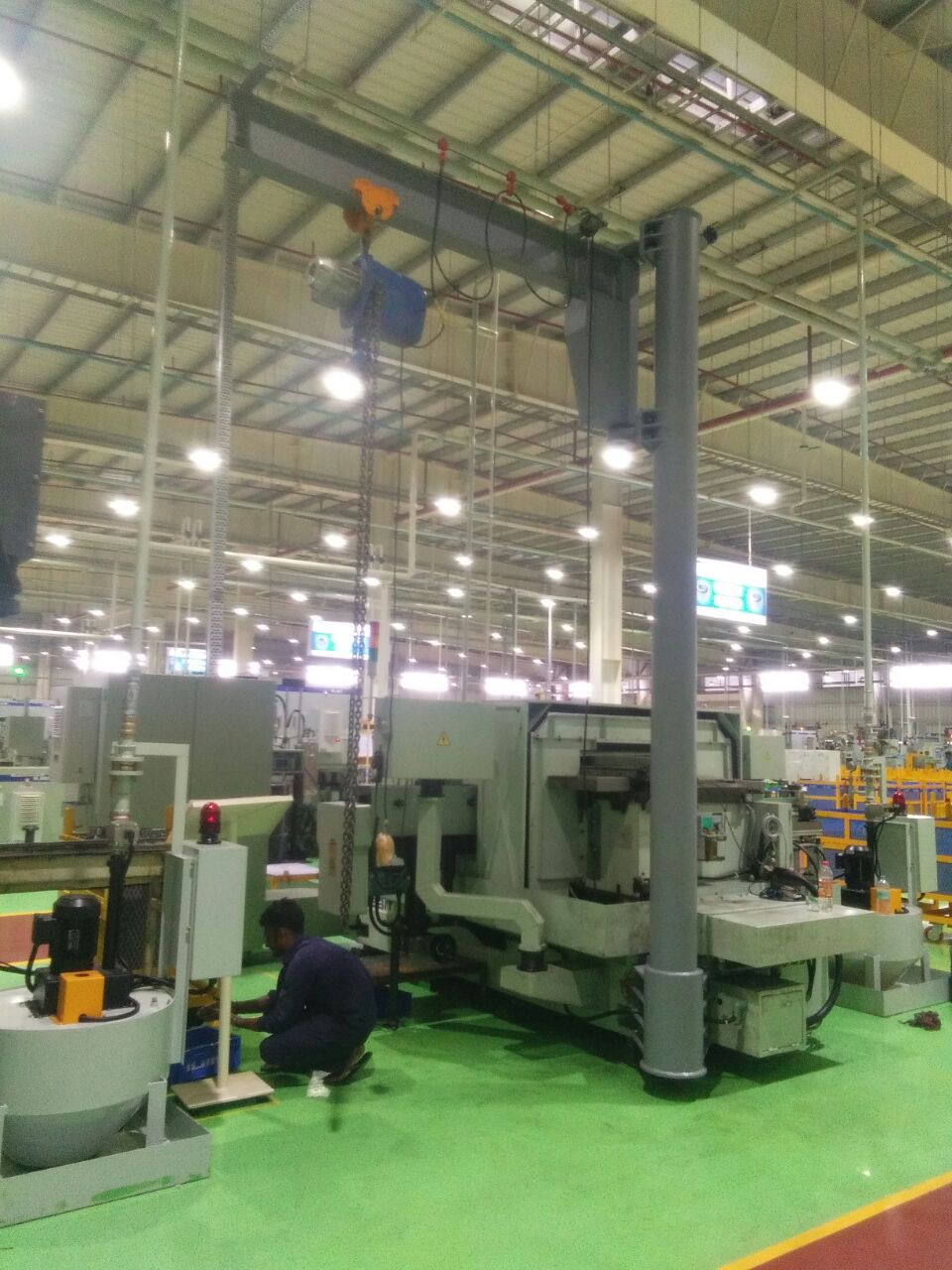 | Automation SPM Automated Pick Up & Drop System Pickup & Drop System – Industrial Automation Solution System Description: A custom-built automated system designed to pick components from a defined... View product → |
Frequently asked questions
What does an SPM pick-up-and-drop system include?
It includes the transfer mechanism and its controls, but not automatically the complete production cell. Confirm whether the quote covers the frame, gripper, sensors, guarding, safety circuit, part-present detection, conveyors, tooling, and integration.
When does an SPM pick-up-and-drop system pay back?
Calculate payback from installed cost divided by annual savings. Include removed labour, higher output, lower handling damage, reduced scrap, and downtime caused by manual transfer; subtract maintenance, tooling, energy, and integration costs.
How do you choose the right pick-and-drop mechanism?
Choose a Cartesian gantry, SCARA, articulated robot, pneumatic slide, servo axis, or combination after defining payload, reach, stroke, cycle time, positioning tolerance, part orientation, workspace, and required changeovers.
What proof should you require before buying an SPM system?
Require a test using your production parts, carriers, tolerances, speeds, and tooling. Record cycle time, repeatability, reject handling, sensor performance, guarding, emergency stops, recovery procedures, and the factory acceptance criteria in the purchase order.