Cable reels left on fabrication floors consume forklift clearance, invite uncontrolled rolling, and slow the search for the right cable. By the end, you will be able to compare storage methods, specify reel and load limits, and check whether a rack suits your handling equipment and Pune site conditions.
Key takeaways
- Store reels in marked bays away from forklift and welding routes.
- Use reel IDs, lifting points, and controlled rolling to prevent cable damage.
- Size capacity from reel dimensions, weights, bay loads, and handling equipment.
- Specify guarding, anchoring, fire separation, and monsoon corrosion protection before ordering.
Where a reel rack earns its space on a fabrication floor
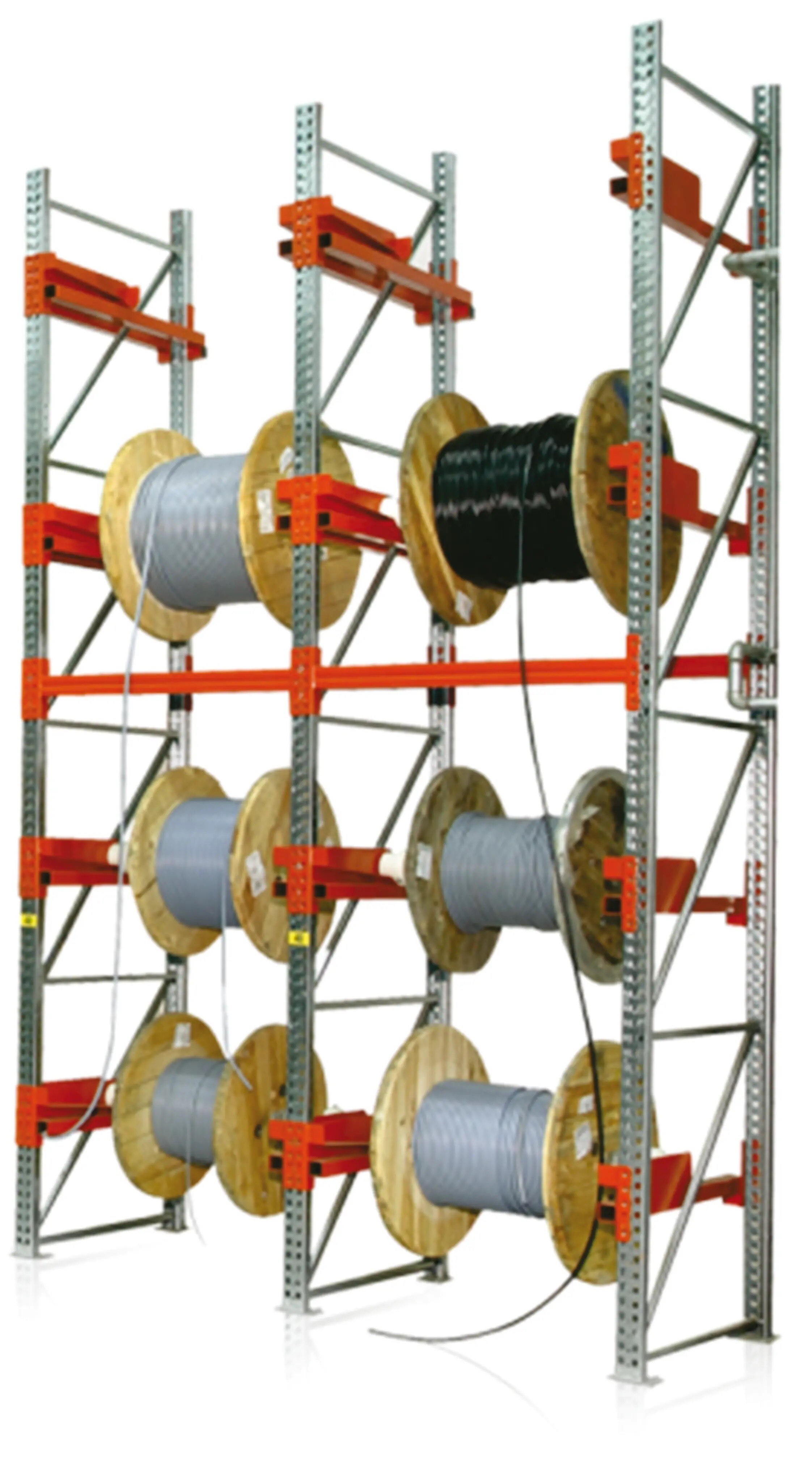
A cable reel rack earns its space by recovering floor area, shortening reel searches, and keeping heavy drums out of forklift and welding routes in a congested Pune fabrication unit. Vertical bays create defined storage locations without narrowing the minimum aisle width required by your actual forklift or pallet truck.
The strongest cable reel rack benefits in Pune appear when storage density matches withdrawal frequency:
- Assign frequently issued reels to low or mid-level bays, where operators can read labels and dispense cable without climbing or unsafe pulling.
- Keep reserve reels higher, but record each bay in a location register; an untracked rack can make retrieval slower than floor storage.
- Display the reel ID, cable type, size, remaining length, and job allocation on durable aisle-facing labels.
- Use cradles, chocks, retaining bars, or a shaft system to stop drums rolling; a loose timber wedge is a poor restraint for a heavy reel.
Forklift pockets or removable cradles improve movement only when their dimensions match the equipment on site. Short or offset fork entry can tip a reel even when the rack’s static capacity looks adequate.
A rack also reduces cable damage by keeping reels off wet floors and drainage paths during Pune’s monsoon. Put it under a roof or suitable cover, seal cable ends, and confirm whether the stated load is an evenly distributed level load rather than a point load.
How to store, identify, and handle reels without damaging cable
An unsecured reel can roll, strike a worker, or unwind cable across a traffic lane. Use cradles, chocks, retaining bars, or a shaft system designed for the reel’s orientation; a loose timber wedge is not a dependable control for heavy drums.
For industrial reel storage, match the rack to each reel’s maximum diameter, width, bore diameter, and gross weight. Specify whether the rated capacity is an evenly distributed static load or a point load, and state the number of positions per level.
1. Inspect every reel before loading. Reject cracked flanges, loose lagging, crushed cable, damaged cable ends, and failed packaging; quarantine damaged drums instead of placing them in a high-level bay.
2. Support the reel on its axle or a shaped cradle, with the payout direction facing the aisle. Keep flanges clear of uprights and fit retaining bars or end stops to prevent roll-out.
3. Check the cable manufacturer’s minimum bend radius before fitting guides. Do not drag cable over a flange or force it around a smaller radius; tight bends can damage insulation, armour, or conductor geometry.
4. Label the aisle side with reel ID, cable type, size, remaining length, and job allocation. Maintain a location register, because unlabeled bays can make retrieval slower than floor storage.
5. Load reserve reels higher and frequent-use reels at low-to-mid ergonomic levels. Use a forklift or pallet truck on clear approaches, keep forks out of cable and flanges, and secure the reel before removing it.
A cable reel rack in Pune also needs anchored bases, lateral bracing, and reel restraints. Tall racks should be checked for overturning and seismic stability under IS 1893 Zone III conditions.
How to calculate capacity and choose the right storage method
Start with the largest reel, not the average one. Record each reel’s gross mass, flange diameter, overall width, bore diameter, centre of gravity, and dispensing method. Size every level for the actual concentrated load at its cradles, shafts, or pallet contact points; include forklift impact, uneven loading, and loading-site tolerances.
A 1,000 kg-per-level rating means little unless the supplier states whether it covers evenly distributed static load or specified point loads.
| Method | Choose it when | Check before approval |
|---|---|---|
| Floor stacking | Reels are few, low-turnover, and on a dry, marked floor | Use chocks or cradles; protect forklift routes and drainage paths |
| Pallets | Reels need frequent forklift movement or job-based grouping | Confirm pallet capacity, reel stability, and clear fork entry |
| Reel stands | Operators dispense from a limited range of standard reels | Match axle diameter, bearing points, and reel width |
| Cantilever storage | Reel widths vary and each level needs independent adjustment | Verify arm bending, torsion, spacing, end restraints, and flange clearance |
| Pallet racks | Loads are palletised and standardised across many positions | Obtain beam point-load data; do not assume pallet-rack ratings suit reels |
| Custom cradles | Heavy, unusual, fragile, or non-standard reels need positive restraint | Specify contact geometry, retaining bars, lifting access, and load paths |
For a cable rack for fabrication units, set low and mid-level positions aside for daily issues; store reserve reels higher only when retrieval equipment is available. One cable storage rack advantages is controlled identification, so label every position with reel ID, cable type, size, remaining length, and job allocation, then maintain a location register.
Keep reels off wet floors and under cover during Pune’s monsoon.
Safety controls for Pune’s traffic, weather, and hot-work conditions
Anchor the rack to a level slab and protect its uprights with bollards where forklifts, pallet trucks, or carts pass. Display the rated load per level, keep heavier reels low, and inspect anchors, beams, cradles, and retaining bars after any impact. A leaning rack or bent restraint is an immediate quarantine condition.
Pune’s monsoon rain, humidity, dust, and heat demand a roofed, ventilated storage position raised above wet floors. Provide drainage, prevent water ingress, and inspect steel for corrosion. Keep aisles, fire exits, hydrants, extinguishers, electrical panels, and emergency routes clear.
Use these traffic and handling controls:
- Mark separate pedestrian and vehicle lanes, enforce low site speeds, and prohibit parking or turning beside loaded bays.
- Fit cradles, chocks, retaining bars, or an engineered shaft; never rely on a loose timber wedge to stop roll-out.
- Load only reels with intact flanges, lagging, cable ends, and packaging. Quarantine cracked, crushed, or water-damaged reels.
- Store frequently issued reels at low-to-mid ergonomic levels; reserve high bays for infrequent stock and ban climbing on rack members.
- Align the payout path with the reel axle or cradle, and maintain the cable maker’s minimum bend radius.
Separate industrial reel storage from welding, cutting, grinding sparks, and chemical storage. Use a hot-work permit, spark containment, and a defined exclusion zone before work starts. Cable insulation and wooden or composite drums add combustible load, so a rack that blocks access creates a fire risk rather than cable reel rack benefits in Pune.
The specification checklist to use before ordering
Approve a cable reel rack in Pune only after the manufacturer converts your reel data into a loading drawing. Provide maximum reel diameter, flange diameter, width, bore diameter, gross mass, axle height, and the number of positions per level. Cable weight alone is not enough.
Ask for these details in writing:
- State whether each rating is an evenly distributed static load, a concentrated point load at the axle or cradle, or a load including forklift impact and uneven placement.
- Show the spindle, axle, or cradle arrangement, reel retaining stops, payout direction, and the minimum guide radius. That radius must meet the cable manufacturer’s minimum bend radius.
- Specify forklift or pallet-truck aisle width, fork-entry clearance, loading sequence, and the safe working height for frequent withdrawals.
- Include upright bracing, base-plate dimensions, anchor-bolt specification, overturning checks, and reel restraint for Pune’s Zone III seismic conditions.
- Specify corrosion protection, roof and splashback assumptions, floor clearance, label locations, and the reel-ID location register.
Compare the proposed storage positions before approving the design:
| Position | Best use | Check before approval |
|---|---|---|
| Low to mid level | Frequently issued reels | Ergonomic withdrawal without pulling or climbing |
| Upper level | Reserve reels | Rated load, forklift reach, and restraint |
| Axle or cradle bay | Controlled dispensing | Reel rotates without flange dragging |
A cable rack for fabrication units fails its purpose if retrieval loses time or damages cable. Dofort can be asked to show the bay drawing, load case, and handling sequence rather than relying on a headline capacity.
Related product
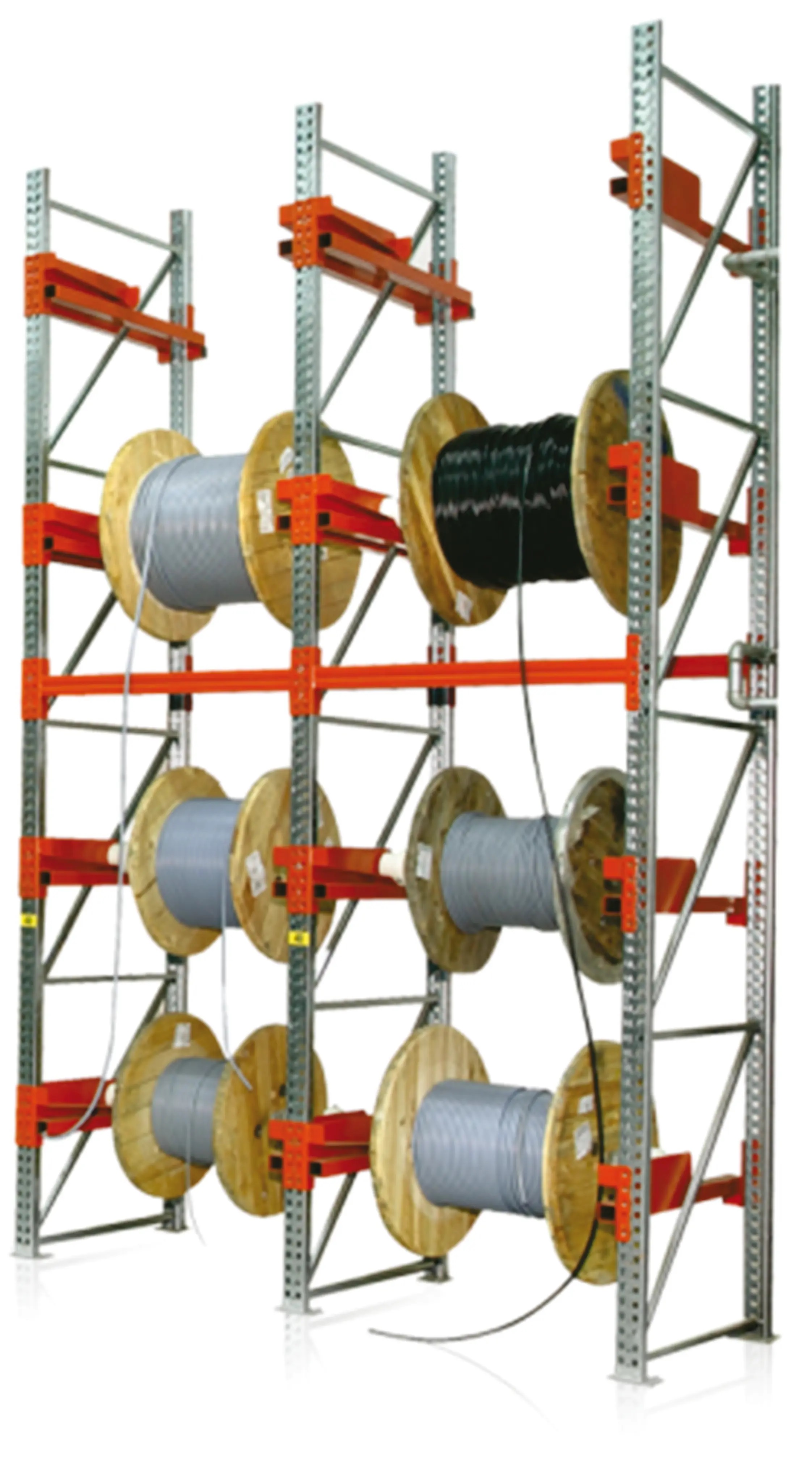 | Storage System Capacity: 1000-2000 Kg/Level View product → |
Frequently asked questions
Where does a cable reel rack earn space in a fabrication unit?
Use vertical bays to define reel locations, recover floor area, shorten searches, and keep drums out of forklift and welding routes.
How should you store and identify cable reels?
Keep reels in marked bays, record reel IDs, protect cable ends, and handle drums through their approved lifting points instead of dragging them.
How do you calculate cable reel rack capacity?
Measure reel diameter, width, and weight; count the required positions; then check bay loads, clearances, and the capacity of your handling equipment.
Which safety controls matter in Pune fabrication units?
Provide anchoring, rack guards, controlled access, monsoon corrosion protection, and separation from vehicle movement and hot-work areas.