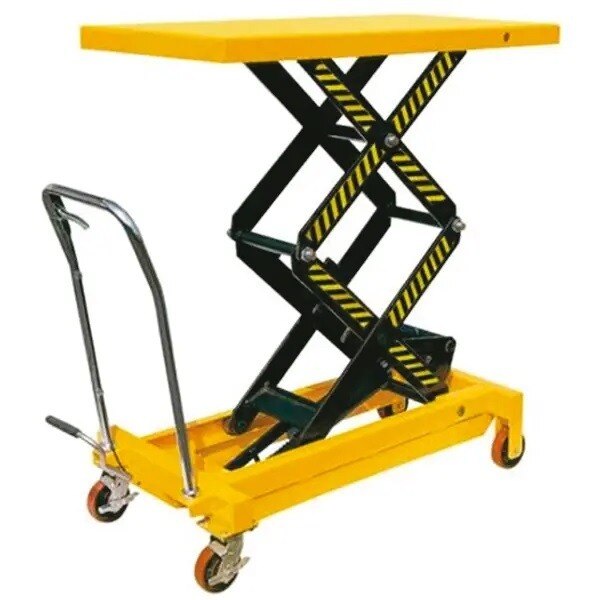
The right lift depends on the work you need it to perform, not the largest capacity or height printed on a brochure. By defining the load, reach, floor conditions, traffic pattern, duty cycle, and safety controls, you can determine whether a mobile scissor lift suits your warehouse or whether another machine is the better choice.
Key takeaways
- Use a scissor lift for raised personnel access, not routine pallet movement.
- Check platform capacity, working height, deck size, and guardrail clearance together.
- Measure aisle width, doorways, floor condition, ramps, and turning space before ordering.
- Specify duty cycles and test travel, braking, lifting, lowering, and emergency functions at acceptance.
Start with the job: people, pallets, or both?
A mobile scissor lift is suitable when the job is personnel access at a raised work position, not routine movement of pallets between floor levels. A mobile scissor lift for warehouse in Pune uses wheels, steering, brakes, a scissor mechanism, and a guarded platform; the platform rises manually or under battery power.
It carries people and permitted materials within its rated capacity.
Classify the task before comparing models:
- People: accessing lights, stock, ducting, or maintenance points from the guarded platform.
- Pallets: transferring palletised goods between levels. Choose a goods lift, dock lift, pallet stacker, or vertical reciprocating conveyor with guarding and interlocks instead.
- People plus tools or small materials: suitable when the combined load stays within the rating and the platform remains stable.
Do not select by goods weight alone. Include the operator, tools, totes, and load, then check where that load sits on the platform; an off-centre load can reduce stability before the stated capacity is reached. A pallet on a platform also needs enough usable floor area and safe restraint.
Confirm that the machine’s design and tests address EN 280-1:2022 for mobile elevating work platforms. Then assess warehouse use: pedestrian and forklift separation, travel speed, warning devices, parking, charging, and emergency-route clearance. For Pune’s monsoon season, reject any model without stated limits for wet floors, water exposure, outdoor wind, and slippery dock transitions.
Match capacity, reach, and platform height to the task
Do not choose by the heaviest item alone. Set rated capacity above the combined weight of the operator, pallet or tote, tools, and load, then check the permitted load-centre position. An off-centre machine part can exceed the limit even when its total weight appears safe.
Match the platform height to the highest hand-placement point, not the rack beam alone. Check platform height, raised working height, and the operator’s actual reach; extra height brings a larger footprint, greater weight, higher cost, and tighter stability limits.
- Pallet transfer: Do not use a personnel scissor lift as a routine pallet transporter. Repeated transfers call for a goods lift, dock lift, pallet stacker, or guarded vertical conveyor with suitable interlocks.
- Rack replenishment: Measure the highest location the operator must place stock, including pallet height and reach above the platform. Select the lowest platform that completes the job safely.
- Packing: Choose a low-lift model that raises cartons to the bench without exceeding its capacity or restricting access around the workstation.
- Machine loading: Rate the lift for the machine, fixtures, tools, and operator, then verify the platform can align with the loading point without side-loading.
- Picking: Select a height that keeps frequent picks between knee and shoulder level, while retaining capacity for the heaviest tote.
For mobile scissor lift applications in Pune, test the chosen capacity and height on the actual load, rack position, and floor route. A stated outdoor wind rating and wet-floor limits matter during monsoon loading operations.
Check the warehouse route before checking the brochure
A route that accepts a pallet truck can still reject a mobile scissor lift. Measure the complete path, including the charging bay, loading dock, emergency exits, and every point where the platform will travel or turn.
1. Inspect the floor. Check slab damage, potholes, expansion joints, drainage grates, ramps, dock edges, and wet patches. Confirm the manufacturer’s maximum permissible slope; stability controls usually restrict elevated travel on an incline. A level-looking floor can still destabilise a raised platform.
2. Measure clearance at the lowest and highest operating positions. Record door heights, sprinkler pipes, beams, cable trays, rack projections, and dock shelters. Keep emergency routes clear, not merely passable.
3. Measure aisle width and turning space with the lift’s full length, width, turning radius, and lowered-platform visibility. Separate pedestrians and forklifts, set travel-speed limits, and identify parking and charging positions before the route becomes congested.
4. Test Pune’s environmental conditions. Wet monsoon floors, slippery dock plates, water ingress, and outdoor-to-indoor transitions belong in acceptance testing. Specify non-marking solid tyres for clean indoor floors, or pneumatic tyres where comfort matters more than puncture resistance.
Request the outdoor wind rating and environmental limits; an indoor model is not weatherproof because it fits through a loading door.
5. Define the duty cycle: lifts per hour, travel distance, operator shifts, average and peak payload, charging opportunities, and permitted charging time. Do not judge productivity from ampere-hours alone; voltage, duty profile, temperature, and charger strategy change the result for warehouse lifting equipment in Pune.
Compare the lift with equipment built for different work
A mobile scissor lift wins when one guarded platform must move between workstations and raise people for packing, inspection, or low-level picking. Choose a mobile lift for distribution center in Pune only after checking traffic separation, parking, charging, emergency-route clearance, and visibility with the platform lowered.
| Option | Better choice when | Worse choice when |
|---|---|---|
| Mobile scissor lift | People need stable, guarded access at several nearby stations | Pallets must travel repeatedly between floors or through congested aisles |
| Semi-electric stacker | You need to lift and place pallets into low or medium racks | A person must work on a raised platform |
| Fixed scissor lift | A repeatable lift point serves one packing or loading station | The task moves around the warehouse |
| Goods lift | Pallets or goods must move between floor levels with guarding and interlocks | Operators need a mobile work platform |
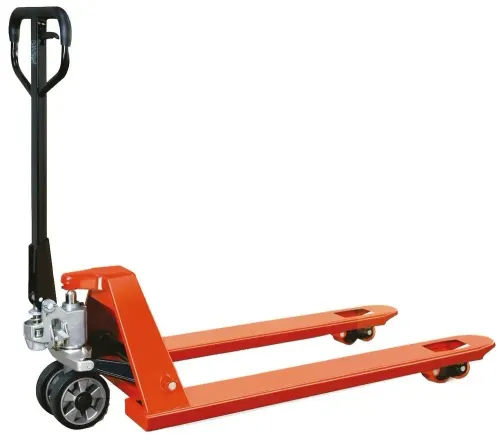
| Pallet truck | Loads travel short distances at floor level | You need elevation, rack access, or personnel lifting |
| Order picker | One operator picks directly from elevated rack locations | You need a broad work platform or frequent relocation |
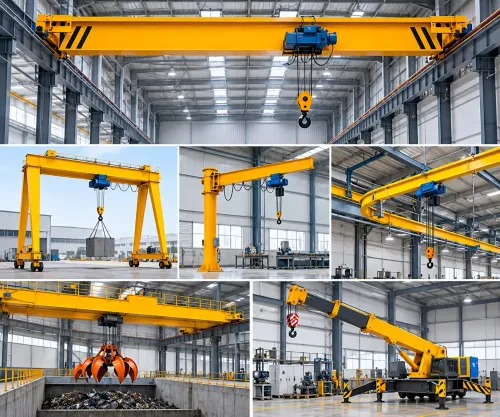
| Crane | Heavy, suspended loads need overhead coverage | People need to stand beneath or work from the lifting device |
Compare overall width, length, stowed height, wheelbase, turning radius, and rack-end clearance—not just platform height. A mobile scissor lift is the wrong choice for repeated pallet transfer, even if its rated capacity appears sufficient.
For wet Pune monsoon routes, verify brakes, traction, water-ingress protection, and the stated outdoor wind rating; EN 280-1:2022 compliance does not make an indoor model weatherproof.
Specify the duty cycle and prove performance at acceptance
Require the supplier to state a duty profile, not just a maximum platform height: lifts per hour, travel distance per cycle, operator shifts, average and peak payload, charging opportunity, and permitted charging time. Battery capacity in ampere-hours means little without voltage, charger strategy, ambient temperature, and workload.
Give Dofort or any supplier the same written profile so competing offers are measurable.
Your purchase specification should also request:
- The operator manual, maintenance schedule, inspection intervals, load chart, emergency-lowering procedure, and training requirements.
- Traction-motor and lift-motor duty ratings, battery and charger warranty terms, and the location and lead time of spare parts in India.
- Confirmation of design and testing to EN 280-1:2022, rather than a generic “CE compliant” statement.
- Stated limits for slope, elevated travel, wet floors, outdoor wind, water exposure, dock plates, and outdoor-to-indoor transitions.
Run the site acceptance test in the actual route, not on an empty concrete patch. Load the platform with the heaviest and most awkward approved load, including its real load-centre position.
- Check braking, steering, controls, emergency stop, guardrails, interlocks, horn, alarms, and emergency lowering.
- Drive empty and loaded over representative joints, potholes, ramps, drainage grates, and transitions at the approved speed.
- Repeat the route on a wet floor where monsoon water or dock operations create the stated risk.
- Raise and lower the load, measure cycle time, and complete the planned lifts per hour without overheating, instability, battery alarms, or control faults.
- Record results, defects, serial numbers, and corrective actions before signing acceptance.
Related products
 | Manual Equipment Capacity: 350-1000 Kg Lift Height: 700-1500 mm View product → |
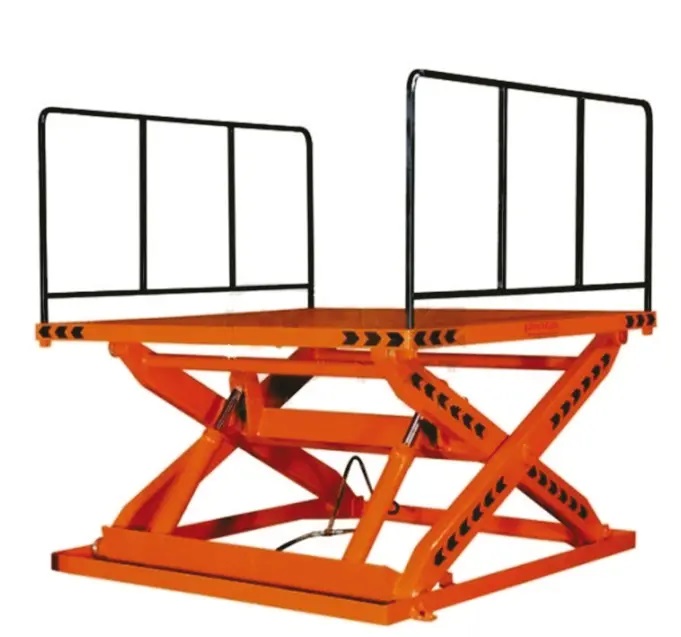 | Loading / Lifting Equipment Height: 1000-10000 Kg Lifting Height: Up to 4500 mm View product → |
Frequently asked questions
When is a mobile scissor lift suitable for warehouse work?
Use it for personnel access at a raised work position. Choose different equipment for routine movement of pallets between floor levels.
How do you match a mobile scissor lift to the task?
Check the combined weight of people and tools, required working height, platform height, deck size, and guardrail clearance.
What should you inspect on the warehouse route?
Measure aisle widths, doorways, lift thresholds, ramps, floor condition, turning areas, and charging or parking locations.
What should you test before accepting the lift?
Test travel, steering, brakes, lifting, lowering, emergency stop, platform controls, alarms, and the specified duty cycle under load.