The right crane depends on the complete lifting job, not the heaviest load printed on a purchase request. Define the load, movement, building constraints, operating duty and safety controls first, then compare configurations and quotations on usable performance and total installed cost.
Key takeaways
- Define load weight, movement path and lifting frequency before comparing models.
- Check capacity at working reach, boom position and maximum lift height.
- Confirm floor strength, overhead clearance, power supply and safety controls.
- Compare duty rating, compliance documents and total cost per lift.
Define the lifting job before comparing crane models
Do not start with a 1,000 kg capacity label. Define the load, movement and building conditions first; a nominal rating may not apply at every reach or boom position. Good shop floor crane selection in Pune begins with measured operating data, not a catalogue.
1. Record the load spectrum: maximum and normal mass, dimensions, centre of gravity, lifting points, lifts per hour, average percentage of rated capacity, starts per hour and annual operating hours. Note required lift height, horizontal reach, placement accuracy and how often the load must be held or repositioned.
2. Map the travel path: distance, aisle width, turning space, floor slopes, surface damage, obstructions and the exact pick-up and set-down points. Mark whether the crane stays fixed, travels on wheels, or needs a runway. This separates a shop floor crane in Pune from a hoist, forklift, pallet truck, jib, gantry or goods lift.
3. Survey the building before comparing models. Collect floor flatness readings, slab drawings, thickness and reinforcement details, allowable bearing pressure, anchor-bolt locations, runway support, available electrical supply, voltage variation, monsoon water exposure, door dimensions and installation access. A floor that supports a machine may still reject concentrated outrigger or wheel reactions.
4. State the operating conditions: manual push or slew effort, positioning speed, operator visibility, restricted zones, shift pattern and training needs. Compare manual and powered equipment by effort, frequency, travel distance, installation, energy, maintenance and downtime—not purchase price alone. Freeze these inputs before requesting quotations.
Match the crane type to the movement and factory layout
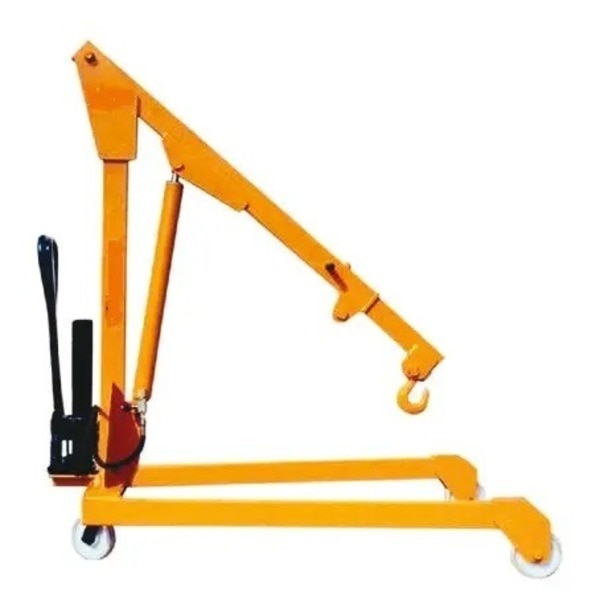
Choose a manual shop floor crane in Pune for occasional lifts, short travel and a level, unobstructed floor. The operator supplies travel or slewing effort while the hoist lifts vertically, so frequent movement, inclined floors, poor wheel alignment or loads near maximum capacity can create fatigue and slow production.
| Option | Best layout and movement fit | Main limitation |
|---|---|---|
| Manual mobile crane | Short distances, low lift frequency and flexible workstations | High operator effort and slow positioning |
| Powered mobile crane | Repeated lifts, longer travel and faster placement | Battery or electrical supply, maintenance and higher installed cost |
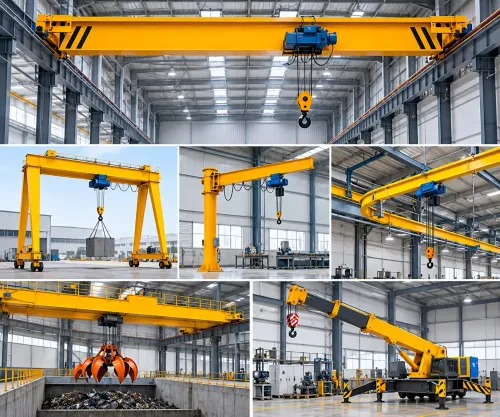
| Jib crane with hoist | Fixed workstation with a clear circular or wall-mounted sweep | Limited reach outside its rotation area |
| Gantry crane | Loads moved along a defined bay without runway support | Occupies floor space and restricts aisle access |
| Forklift or pallet truck | Palletised loads travelling between storage and production | Poor choice for suspended loads or precise placement |
| Goods lift | Vertical transfer between floors | Not a substitute for horizontal shop-floor handling |
For an industrial crane for factory in Pune, draw the actual hook path before choosing. Check column obstructions, machine guards, doors, overhead services, sprinklers, maintenance access and aisle width; nominal span does not prove that the hook reaches the loading point.
Compare total cost per lift, not purchase price. Include operator time, lift frequency, travel effort, energy, installation, brake and chain or rope replacement, statutory examination, downtime and structural support. Specify allowable pushing or slewing effort alongside SWL.
Check usable capacity, reach, lift height and load stability
A 1,000 kg rating does not prove that the hook can lift 1,000 kg at every position. Ask for the safe working load at the actual boom outreach, trolley position and lift height, not only the catalogue maximum.
For a wall-mounted or floor-mounted jib, the calculation must include the load, hoist and trolley self-weight, outreach, column or wall reactions, anchor forces and slab or foundation capacity. A longer jib increases overturning moment sharply, even when the stated SWL remains unchanged.
Plot the hook’s complete operating envelope on the real layout. Check the minimum and maximum hook heights, lateral reach, trolley travel and approach to the loading and set-down points. Include columns, machine guards, overhead services, fire sprinklers, doors and maintenance access; nominal span does not reveal these obstructions.
Use this verification checklist before approving shop floor lifting equipment in Pune:
- Mark the heaviest and most frequently handled loads, including dimensions, centre of gravity and lifting points.
- Confirm the hook reaches every pickup and placement point without side pulling, collision or suspended-load travel over prohibited areas.
- Check the load remains stable through acceleration, slewing, trolley travel and final placement; specify suitable slings, shackles, spreader beams or lifting fixtures.
- Require the as-installed SWL, restricted positions and operating conditions on the handover documents for the shop floor crane in Pune.
- Require commissioning records, load-test results, hook and accessory certificates, operator and rigger training, and inspection and maintenance instructions.
A test load cannot correct an inaccessible hook path or unstable rigging arrangement. Resolve those design failures before installation.
Verify the floor, clearances, power supply and operating safeguards
Freeze the site conditions before comparing quotations. A building’s slab, electrical supply and access route can change the crane type, installation method and total cost.
1. Obtain slab drawings and have a structural engineer verify floor capacity, flatness, anchor locations and any runway or column support. Check the foundation for cracking, settlement and oil-soaked concrete. A level that is adequate for storage may still cause wheel binding or unsafe crane travel.
2. Mark the complete operating envelope on the actual layout. Record minimum and maximum hook height, lateral reach, trolley travel, loading points and collision clearances from columns, machine guards, doors, fire sprinklers, lights and overhead services. For an industrial crane for factory in Pune, include maintenance access and the route for future removal.
3. Confirm the electrical supply at the installation point: available capacity, voltage, frequency, voltage variation, earthing, isolator location and control voltage. Specify pendant or radio control, emergency stop, brake arrangement and festoon or cable management. A machining or washing area needs protection against coolant, dust and water; check the required ingress protection rating.
4. Inspect monsoon water exposure, drainage and access for delivery, erection and later replacement. Confirm the crane will not obstruct fire exits, aisles or guarding, and define restricted zones and safe operating distances.
5. Require commissioning and load-test records, inspection certificates, hook and accessory certificates, operating instructions, lubrication schedules, spare-parts support and operator-rigger training. The handover must state the as-installed safe working load and restrictions, not just catalogue data. This is essential in shop floor crane selection in Pune.
Compare quotations by duty, compliance and total cost per lift
Require a signed quotation based on your recorded load spectrum, not a catalogue rating. It should state duty class, lifts per hour, average load, travel distance, starts per hour, annual hours, allowable operator effort, as-installed SWL, restricted zones and operating conditions.
For a manual shop floor crane in Pune, insist on the maximum permitted push or slew force; frequent lifts, poor floor alignment and near-capacity loads can make “low-cost” equipment slow and exhausting.
| Basis | Manual crane | Electric crane |
|---|---|---|
| Total cost per lift | Operator time, effort, downtime and maintenance; no energy cost | Energy, controls, brake and rope or chain replacement, plus maintenance |
| Installation | Base plates, anchors and concentrated floor reactions | Electrical connection, controls and structural support |
| Best fit | Low duty cycle and short travel | Repeated lifts, long travel or fast positioning |
| Pune site risk | Floor flatness, wheel alignment and monsoon water exposure | Supply capacity, voltage variation and control-panel protection |
Obtain these items before approval:
- A load test or commissioning procedure, statutory examination plan and test certificates for hooks, slings and other accessories.
- Operating instructions naming the actual SWL, restricted areas, emergency actions and inspection points—not only a generic catalogue manual.
- Maintenance and lubrication schedules, recommended brake and rope or chain replacement intervals, spare-parts availability and operator-and-rigger training.
- Structural calculations showing slab thickness, reinforcement assumptions, floor bearing pressure, anchor-bolt design and outrigger or base reactions.
Dofort can be asked to freeze these installation inputs in its quotation for shop floor lifting equipment in Pune, so a seemingly cheaper crane does not acquire an expensive structural base or site modification later.
Related product
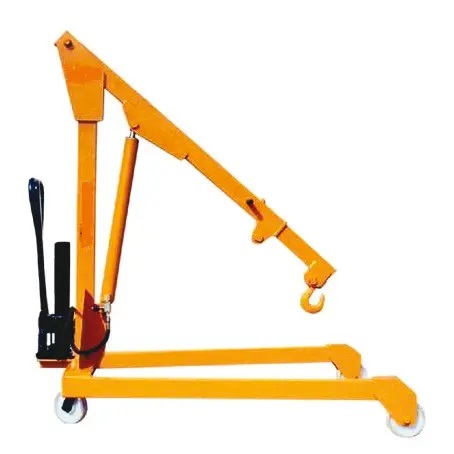 | Manual Equipment Capacity: 1000-2000 Kg Lift Height: 2000 mm View product → |
Frequently asked questions
What should you define before choosing a shop floor crane?
Record the heaviest load, load dimensions, centre of gravity, lifting points, movement path, lift frequency and required positioning accuracy.
Which crane type suits a shop floor and factory layout?
Choose based on movement: mobile cranes suit changing workstations, jib cranes suit fixed bays, gantry cranes suit open floor areas, and overhead cranes suit repeated travel along a runway.
Does a crane’s rated capacity apply at every reach?
No. Check the load chart for capacity at the intended boom length, outreach, lift height and operating position. Confirm the load remains stable throughout the movement.
What site checks are needed before installing shop floor lifting equipment?
Verify floor load capacity, aisle width, turning space, overhead obstructions, electrical supply, anchoring requirements and operator safeguards.