Choosing a stacker for a manufacturing plant involves more than comparing advertised load capacity and lift height. You need to match the truck to pallets, aisles, floors, shifts, battery infrastructure, rack geometry and service coverage, then test those assumptions before signing an order.
Key takeaways
- Match stacker type to load frequency, travel distance and lift height.
- Check rated capacity at the required lift height, not the headline capacity.
- Confirm battery charging, floor condition and aisle clearance before ordering.
- Test service response, customization and commissioning during the supplier demonstration.
Match the stacker type and supplier model to your operation
Choose the equipment by load frequency, travel distance, lift height and aisle width—not by the motor label alone. The right supplier category depends on how continuously the truck will work and how much support downtime would cost.
| Option | Fits this flow | Supplier category to prefer |
|---|---|---|
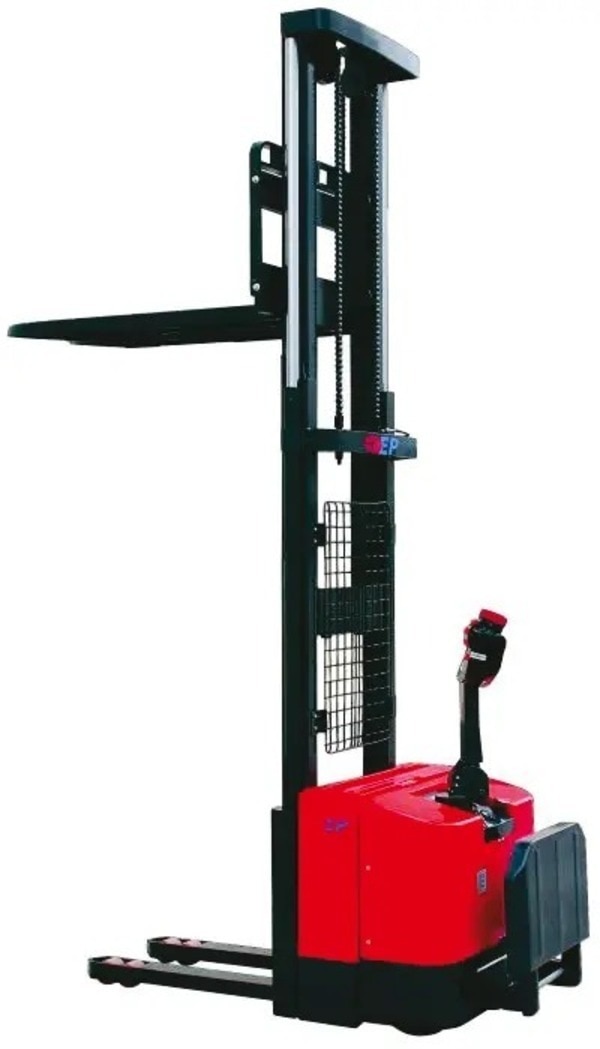
| Fully electric stacker | Frequent pallet movement, repeated lifting, longer travel and multiple shifts | Manufacturer or established dealer with battery, charger and service support |
| Semi-electric stacker | Occasional lifting with short travel and moderate throughput | Dealer or service provider offering practical commissioning support |
| Manual stacker | Low lift frequency, short distances and very small operations | Local supplier, if floor condition and operator effort are acceptable |
| Electric pallet truck | Horizontal movement without rack storage or substantial lifting | Material-handling dealer with readily available parts |
| Counterbalance forklift | Heavy loads, outdoor movement, ramps or loads a stacker cannot safely handle | Manufacturer or specialist dealer with trained technicians |
When comparing electric stacker suppliers in Pune, ask for the machine’s residual-capacity chart, not just a headline rating such as 1,000 or 1,600 kg. Capacity changes with load-centre distance and lifting height, so a truck that suits floor-level movement may not suit your highest rack beam.
To buy electric stacker in Pune, compare the support model with the purchase price. A manufacturer may offer customization; a dealer may provide faster local access; an importer needs verified parts coverage; a service provider can strengthen breakdown response; and a rental company reduces commitment while you validate demand.
Request these terms in writing:
- Commissioning and model-specific operator training
- Preventive-maintenance visits and breakdown response time
- Battery, charger, spare-parts and warranty coverage
- Temporary replacement equipment during extended repairs
Read capacity, mast and aisle specifications correctly
A 1,000 kg or 1,600 kg label does not prove that a stacker will lift your load safely to the top rack. Read the residual-capacity chart: it must show capacity at your actual load-centre distance and lifting height. A longer load moves its centre of gravity forward and reduces capacity.
Ask electric stacker manufacturers in Pune to state these dimensions in the quotation:
- Pallet length, width and maximum load dimensions
- Fork length, minimum and maximum fork spread
- Rated capacity, load-centre distance and capacity at each required lift height
- Mast type, collapsed height and maximum lifted height
- Turning radius and required aisle width
- Maximum load centre, centre of gravity and loads per hour
| Specification | What to verify | Why it matters |
|---|---|---|
| Rated capacity | Capacity at your load centre and top lift height | The advertised maximum can fall sharply as the mast rises |
| Mast dimensions | Collapsed height, free lift and rack beam clearance | A low doorway or ceiling can stop the truck before it reaches the rack |
| Fork geometry | Fork length and adjustable spread for your pallet | Short or badly spaced forks leave the load unstable |
| Aisle requirement | Turning radius plus pallet and rack clearance | A rated truck can still strike racks in an undersized aisle |
Give the supplier your pallet type, floor condition, ramp gradients, travel distance, shift pattern, ambient temperature and dust or washdown exposure. Request a demonstration using your heaviest and longest load, then record the delivered residual-capacity chart in the purchase specification.
Plan the battery, floor and traffic environment before ordering
Reliable operation starts with a site that suits the truck, not with the charger included in the quotation. Before ordering a battery operated stacker in Pune, document the battery chemistry, shift pattern, charging location and environmental exposure.
1. Provide a designated charging area with electrical isolation, protected charging connections and clear access. For lead-acid batteries, install ventilation, keep ignition sources away, protect floors and workers from acid, and define procedures for electrolyte handling, spill response and connector inspection.
2. Survey the travel route with the truck loaded. Record floor flatness, cracks, expansion joints, dock edges, ramp gradients and washdown areas. A catalogue-rated stacker can become unstable on a broken floor or unsuitable ramp.
3. Mark every pedestrian crossing, blind corner, emergency exit and restricted zone. Set speed controls, warning systems, visibility measures and physical separation where people and trucks share an aisle. Never allow parked pallets to narrow the escape route.
4. Give the supplier measurable operating inputs: pallet type, maximum pallet and load dimensions, load-centre distance, lift height, lifts per hour, travel distance, ambient temperature, dust level and shift duration. Ask for residual capacity at your load centre and maximum lift height, not only the headline rating.
5. Verify overhead clearance for the collapsed mast and raised load. Record the required aisle width, turning radius, fork length and fork spread so the stacker can approach, turn and place pallets without striking racks or structures.
Commission the truck on the surveyed route, then record battery runtime, charging time, safety-device operation and operator training before regular use.
Use a site-specific checklist for demonstrations and commissioning
Measure the route with the intended load, not an empty truck. Record pallet dimensions, maximum load dimensions, load-centre distance, lift height, collapsed mast height, turning radius, aisle width, floor flatness, expansion joints, ramp gradients, overhead clearance and pedestrian crossings.
1. Give the supplier your maximum load, pallet type, centre of gravity, lifts per hour, travel distance, shift pattern, dust or washdown exposure and ambient temperature. Ask for the residual-capacity chart at your actual load centre and lifting height, not only the headline rating.
2. Ask the demonstrator to collect and place your heaviest pallet, travel the narrowest aisle, cross every joint, climb the steepest ramp and stop on the designated parking area. Watch mast stability, braking, visibility, turning clearance, steering effort and emergency-stop operation.
3. Test the complete battery and charger routine during the demonstration. Record charging time, battery type, expected runtime for your shift, connector location, warning indicators and what happens after a low-charge alarm.
4. Put pallet size, fork length, fork spread, mast type, heights, turning radius, aisle width, rated and residual capacities, floor limits and ramp limits in the purchase specification. Include commissioning, model-specific operator training, pre-use checks, preventive maintenance, breakdown response, warranty exclusions, spare-parts support and temporary replacement terms.
For anyone planning to buy electric stacker in Pune or source a battery operated stacker in Pune, require signed commissioning records. Training must cover the supplied model, loads, pedestrians, ramps, parking, charging and battery hazards; qualification on another model is not enough.
Compare Pune suppliers on service, customization and integration
Choose the supplier that can prove support after delivery, not the one with the lowest technically acceptable quotation. Compare electric stacker suppliers in Pune against the same service, customization and integration evidence.
| Supplier type | Main strength | Risk to test |
|---|---|---|
| Manufacturer | Factory-level design changes, parts and technical records | Confirm local technicians, response time and warranty exclusions |
| Dealer | Multiple brands and faster model comparison | Check who owns commissioning, repairs and spare-parts stock |
| Importer | Access to specialist imported equipment | Verify lead times for batteries, controllers and mast parts |
| Service provider | Breakdown expertise across installed fleets | Confirm whether it can supply a replacement truck |
| Rental company | Trial use, peak-demand cover and lower initial commitment | Check truck age, battery condition, maintenance history and rental response |
Require these items in writing:
- Commissioning date, operator training, preventive-maintenance visits, breakdown response time, battery and charger support, spare-parts availability and temporary replacement arrangements.
- A residual-capacity chart showing capacity at your load-centre distance and maximum lift height; a “1,000 kg” label does not prove 1,000 kg at the top of the mast.
- Fork length and spread, pallet dimensions, mast type, collapsed and lifted heights, turning radius and required aisle width.
- Customization inputs covering load dimensions, centre of gravity, lifts per hour, travel distance, floor condition, ramps, dust or washdown exposure and shift pattern.
For automated handling, test pallet presentation, navigation, guarding, safety scanners, controls integration and fault recovery—not just travel and lifting. Dofort should state these boundaries in the quotation if its equipment will connect to your warehouse controls.
Related products
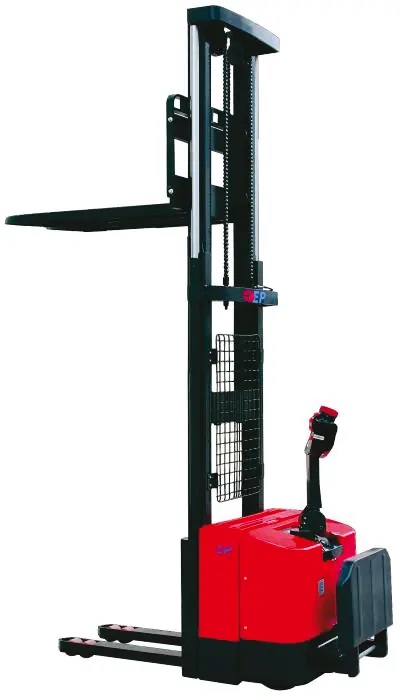 | Electrical Battery Operated Capacity: 1600 Kg Lifting Height: Up to 6000 mm View product → |
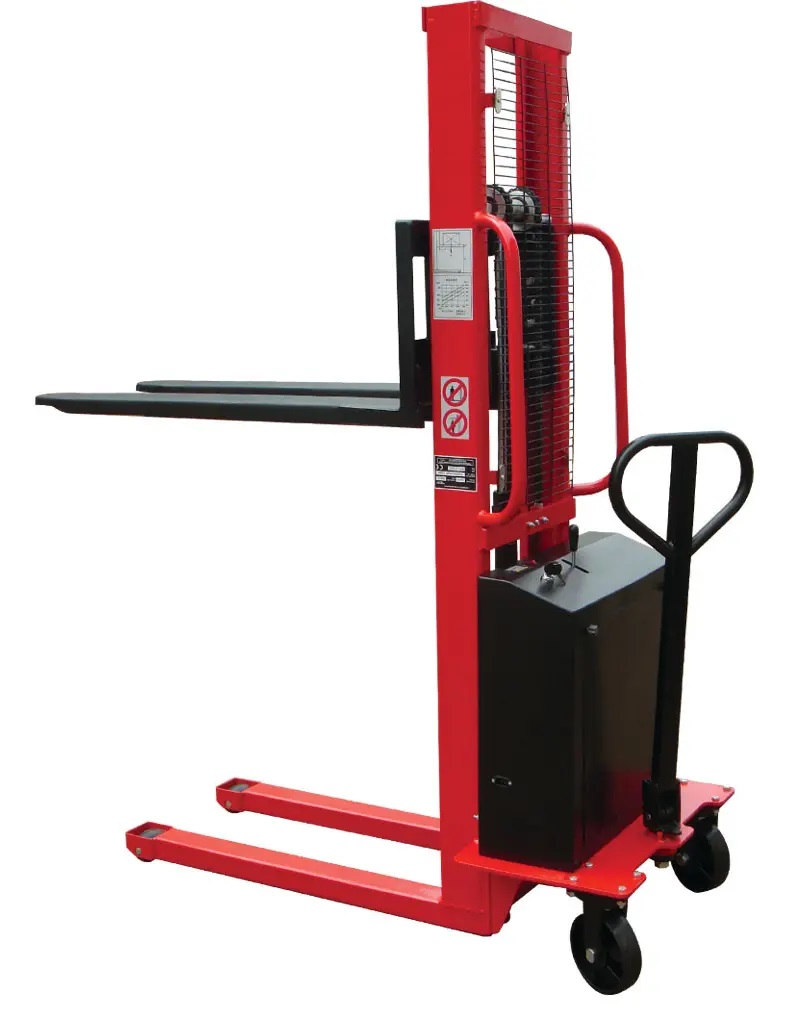 | Electrical Battery Operated Capacity: 1600 Kg Lifting Height: Up to 3000 mm View product → |
Frequently asked questions
How do I choose the right electric stacker for a manufacturing facility?
Match the stacker to load frequency, travel distance, lift height, aisle width and the support your operation needs during downtime.
Which electric stacker specifications should I compare?
Compare rated capacity at the required lift height, mast type, maximum lift, collapsed height, turning radius, overall length and minimum aisle width.
What site conditions must I check before buying a battery-operated stacker in Pune?
Check charging space, battery type, charging power, floor flatness, ramps, dock edges, traffic routes, pedestrian separation and aisle clearance.
How should I evaluate electric stacker suppliers in Pune?
Ask suppliers to demonstrate the truck with your pallet and rack layout, then compare service coverage, spare parts, customization, controls and commissioning support.