A foldable pallet rated at 500–1000 kg is not automatically suitable for every factory task. The right comparison depends on material, folding mechanism, load test, site conditions, and compatibility with racks, forklifts, conveyors, and automation. By the end, you will have a practical method for specifying, testing, and costing the design that fits your Pune operation.
Key takeaways
- Compare safe working loads under stacking, racking, and dynamic handling conditions.
- Check folded height, fork openings, hinges, and latches against every handling system.
- Choose plastic for corrosion resistance; choose metal for heat, impact, or higher rigidity.
- Run a site trial and calculate repair, transport, cleaning, and replacement costs.
Plastic, mild-steel, and other foldable pallet designs: what actually differs?
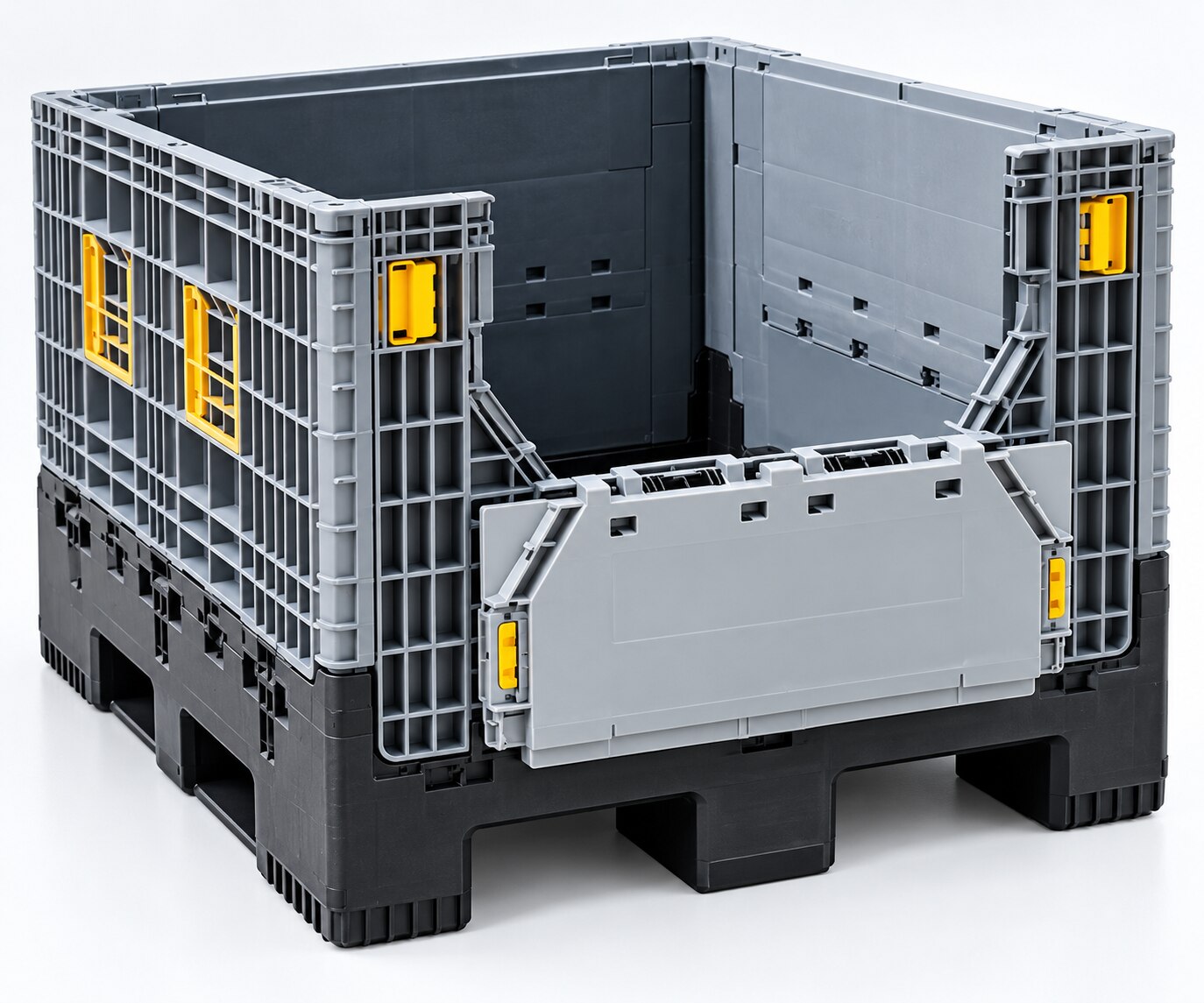
Compare function first: choose a flat pallet with folding feet when you need returnable transport, stacking, and low folded height. Choose collapsible walls when loose components need containment; wall hinges and latches can block fork entry, conveyor transfers, or automated dispensers.
Choose a collapsible pallet cage when parts need secure access control, taller containment, or protection during movement.
| Material | Strength and useful behaviour | Typical failure mode and service implication |
|---|---|---|
| Plastic | Light, rust-free, washable, dimensionally consistent | HDPE or polypropylene hinges, latches, runners, and feet can crack, deform, or cold-flow after impact, heat, UV exposure, or chemical contact; replacement often means the whole unit |
| Mild steel | High resistance to point impact, hot parts, and concentrated loads | Feet, tubes, and welds can bend; scratches and uncoated welds rust. Expect heavier handling, noise, repainting, or straightening |
| Wire mesh | Ventilation, drainage, and visibility with metal-frame strength | Mesh can snag bags, straps, or packaging; bent panels and damaged welds can jam transfers |
| Wood | Easy to modify and repair with common fasteners | Moisture causes swelling, rot, and loosened fasteners; inspect every joint after monsoon exposure |
A plastic foldable pallet suits clean, repetitive flows where low tare weight matters. A metal foldable pallet suits impact, heat, and point loads but adds return freight, floor damage, and corrosion checks. Compare purchase price with cleaning, inspection, repair, scrap value, and a jammed-line cost.
For exports, review any timber blocks or dunnage separately for ISPM 15 treatment requirements.
Compare load ratings by test condition, not by one capacity number
A quoted 500–1000 kg capacity is not a safe working load until you know the test condition behind it. A pallet rated for floor stacking can fail when its feet are unsupported between selective-rack beams.
| Rating | What it means | Evidence to request |
|---|---|---|
| Static | Load held on a defined, continuous floor support without movement | Test load, duration, deck support, load footprint, deflection and safety factor |
| Dynamic forklift | Load carried while forks lift, move and place the pallet | Fork spacing, entry direction, acceleration or handling method, load distribution and test report |
| Stacking | Load applied by upper pallets onto the lower pallet’s supports | Stack height, contact points, restraint method, duration and lower-pallet deformation |
| Selective-rack | Load supported only at specified rack beams | Beam spacing, pallet orientation, overhang, support width, load footprint and deflection limit |
ISO 8611 defines pallet test methods; it does not create one universal safe working load. A supplier’s figure matters only when the test resembles your rack beams, fork spacing, handling equipment and actual cargo.
Before approving a foldable pallet for factory use, ask for the test report and drawing, not just a catalogue number. Confirm that the quoted 500–1000 kg rating covers your heaviest load, point loads, uneven loading, folded-leg locks and repeated handling. Reject a rating with no support condition or safety factor stated.
For a foldable pallet comparison in Pune, record separate ratings for floor storage, forklift movement, block stacking and selective racks. Choose the foldable pallet for factory operations from the lowest applicable rating, then validate it with a loaded site trial.
Check the folded pallet against forks, racks, conveyors, and stacks
Usable deck size and overall footprint decide whether a foldable pallet fits your Pune route, not the nominal outside length alone. Measure the product footprint, pallet overhang, rack beam width, conveyor guides, and the clearance left for stacking.
A foldable pallet comparison in Pune should separate these designs:
| Design | Structural feature | Main fit risk |
|---|---|---|
| Flat pallet with folding feet | Hinged or removable legs under a deck | Feet can strike conveyor guides or fail to locate on rack beams |
| Pallet with collapsible sides | Hinged panels and locking pins | Walls, latches, or pins can obstruct forks and pallet dispensers |
| Collapsible pallet cage | Folding frame with contained load space | Folded height and cage joints can reduce stack clearance |
Check fork-entry openings in both directions, including the height between the floor and deck. Confirm that hinged or removable legs cannot fold under load, and that every locking pin remains captive when the pallet is lifted.
A point load from a machine part can deflect a plastic deck even when the total load is within its rating; use spreader boards or a reinforced deck when the load has small feet.
For a foldable pallet for factory use, measure the erected and folded height with hinges, latches, damaged units, and separators included. Test loaded stacks against rack uprights, ceiling clearance, and the actual restraint method. Run the pallet through conveyors and automation in both states with real stops, guides, transfer plates, sensors, and fork pockets.
Oil, water, and powder also make plastic fork-entry surfaces slippery, so test drainage and cleaning chemicals before acceptance.
Match the material to monsoon moisture, washdown, heat, oils, and chemicals
Choose a plastic foldable pallet for monsoon washdown and rust-free, repeatable conveyor dimensions; choose painted or galvanised mild steel for hot parts, point impacts, and concentrated loads. A metal foldable pallet weighs more and needs inspection at scratches, welds, hinges, and cut edges.
| Option | Strength | Main risk | Best fit |
|---|---|---|---|
| Plastic foldable pallet | No rust, washable, light | Hinge cracking, cold-flow, UV and heat ageing; oil or water can make decks slippery | Wet areas, clean handling, moderate impact |
| Painted mild steel | Impact resistance, repairable frame | Rust beneath damaged coating and at uncoated welds | Dry interiors and heavy loads |
| Galvanised mild steel | Better monsoon protection than bare steel | Cut edges, welds, and hinge pins can corrode; galvanising is not stainless steel | Damp storage with limited chemical exposure |
| Stainless steel | Strong corrosion and chemical resistance | Higher cost and tare weight; can still suffer chemical attack | Aggressive washdown, food or chemical areas |
| Wire mesh | Drainage, visibility, ventilation | Packaging snags; mesh bends under point impact | Parts needing airflow or liquid drainage |
For foldable pallet types in Pune, perform these acceptance checks:
- Confirm HDPE or polypropylene grade, UV additive, heat limit, and compatibility with each cleaning chemical using its safety data sheet.
- Specify paint preparation, coating thickness, galvanising treatment, and the repair method after scratches or welding.
- Spray water and oil onto deck and fork-entry surfaces; check slip, drainage, stacking stability, and cleanability.
- Inspect hinges, locks, drain holes, welds, and cut edges after wet-season exposure. Test barcode, QR, or RFID identification after washing, abrasion, heat, and metal shielding.
Use a site trial and lifecycle calculation before you standardise
Approve a foldable pallet for factory use only after one complete route trial, not a supplier demonstration. Record the actual load, fork truck, rack, conveyor, return stack, wash cycle, and export pack condition.
1. Run a foldable pallet comparison in Pune on the proposed route. Load production parts, measure erected and collapsed stack heights, and include separators, latches, hinges, and one deliberately damaged unit. Compare return-truck space and restraint method, not a claimed volume ratio.
2. Test automation in both states using your pallet stops, guides, transfer plates, sensors, dispensers, fork pockets, and conveyor transfers. Log every jam, deck deflection, sensor miss, and slow manual correction.
3. Verify capacity against the real load footprint and rack beams. Request ISO 8611 test reports showing the test method and configuration; a 500 kg rating proves little if your point loads, fork spacing, or selective-rack span differ.
4. Perform an export trial with the destination customer’s stacking, cleanliness, container, and marking rules. Check whether water, dirt, or trapped components survive transit and whether collapsed units stay restrained.
5. Time maintenance: inspect locking pins, hinges, welds, feet, and deck damage after each cycle. Record replacement parts, repair minutes, cleaning labour, scrap value, and line-stoppage cost.
6. Calculate total handling cost per trip: purchase price, return freight, inspection, cleaning, repairs, replacements, and failures. Validate barcode, QR code, RFID, or stamped serial markings after washing and abrasion; mount RFID away from metal shielding.
Dofort can test a selected design against your actual racks, conveyors, fork equipment, and automation before you standardise it.
Related products
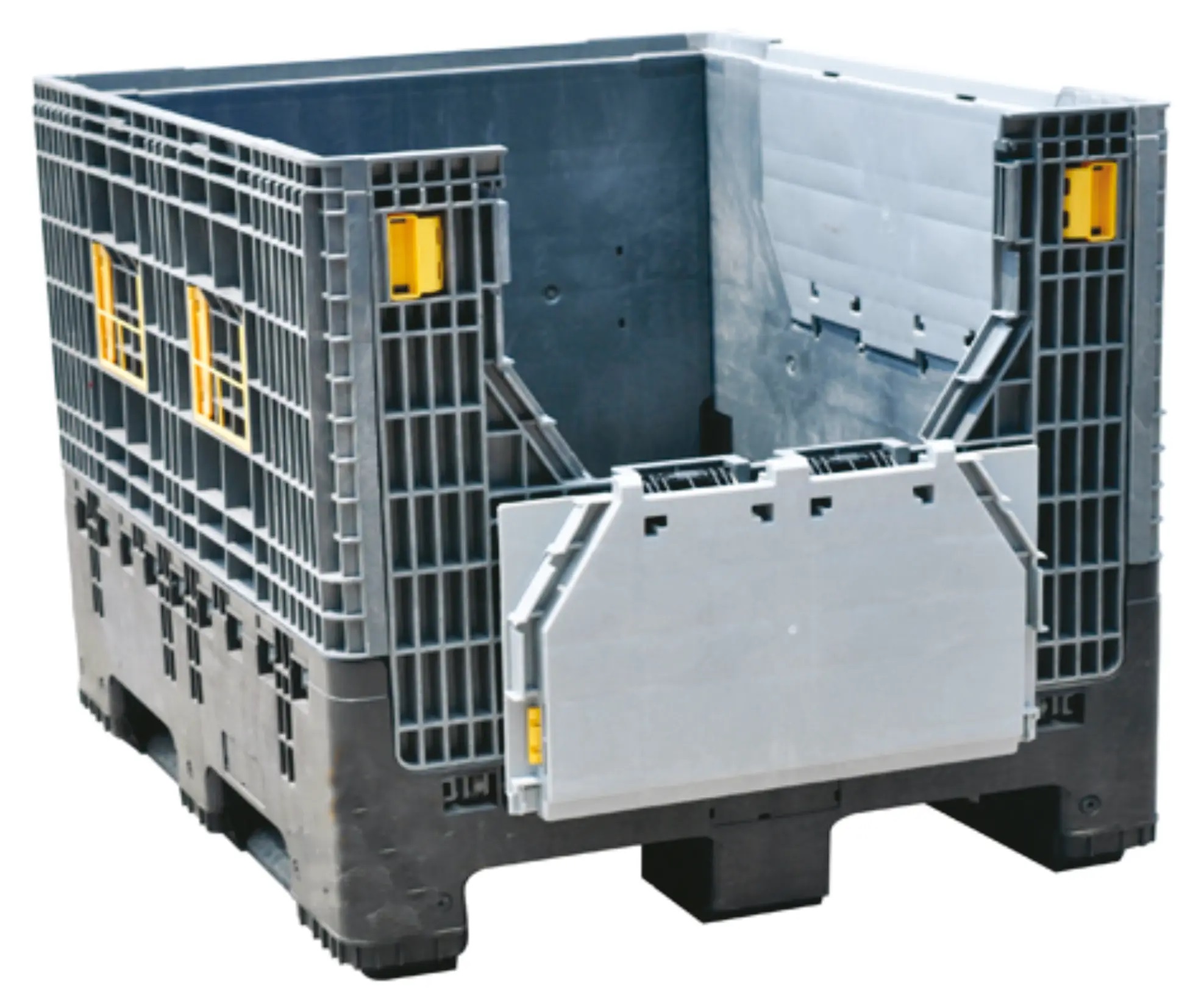 | Pallets, Bins & Crates Capacity: 500-1000 Kg Size: 800/1000/1200 mm View product → |
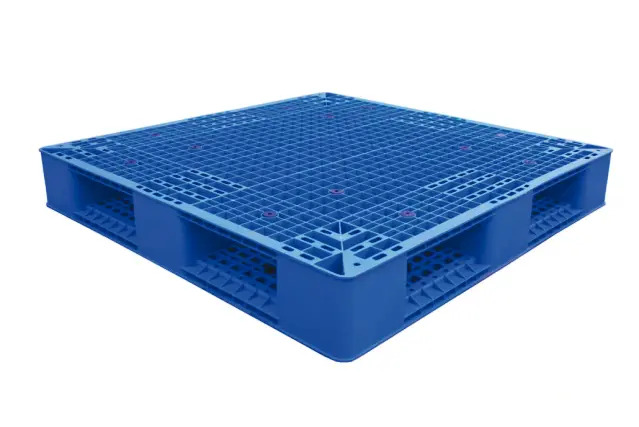 | Pallets, Bins & Crates Capacity: 700-1500 Kg Size: 800/1000/1200 mm View product → |
Frequently asked questions
What differs between plastic and metal foldable pallets?
Plastic pallets resist moisture, corrosion, and many cleaning conditions, while mild-steel designs provide rigidity and impact tolerance. Compare weight, repairability, temperature exposure, chemicals, and handling compatibility rather than material alone.
How should you compare foldable pallet load ratings?
Ask for separate ratings for static stacking, dynamic forklift handling, and supported racking. Check the test conditions, pallet orientation, load distribution, duration, and safety factor behind each figure.
What should you check before using a foldable pallet with forklifts, racks, or conveyors?
Confirm fork-entry dimensions, folded height, deck support, rack beam contact, conveyor transfer points, stack stability, and whether hinges or latches obstruct automated equipment.
How do Pune factory conditions affect foldable pallet selection?
Match the pallet to monsoon moisture, washdown, heat, oils, and chemicals. Plastic suits corrosion-prone environments, while metal can suit high heat and severe impacts; verify compatibility with the exact substances and process temperatures.
Related product
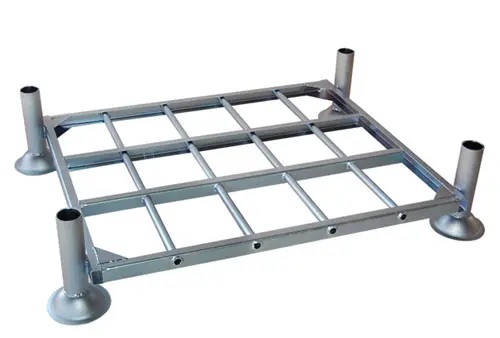 | Pallets, Bins & Crates Capacity: 500-1500 Kg View product → |